
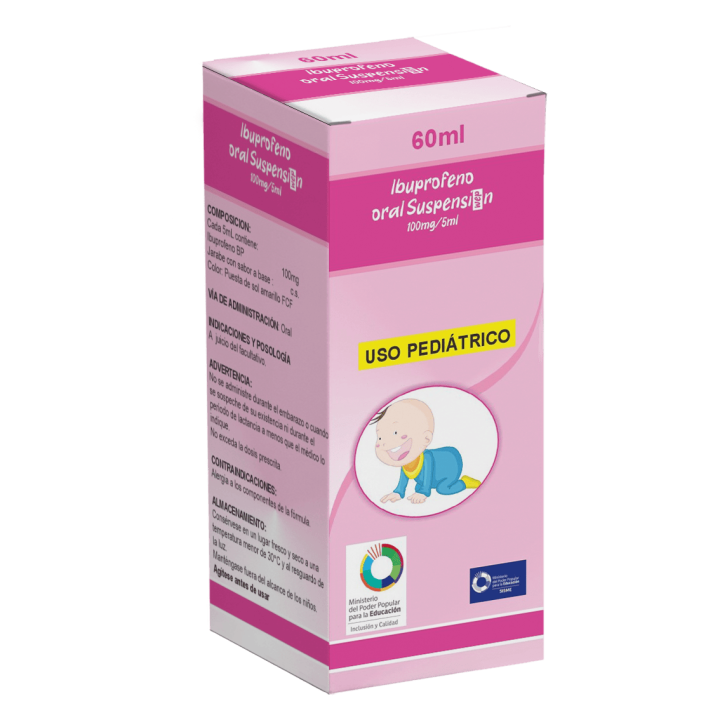
Ibuprofen oral Suspension 100mg/ 5ml
GMP Certified Ibuprofen oral Suspension 100 mg/5 ml Manufacturer.
Therapeutic Class: Pain Management
Dosage Forms: Liquids
Brand Name: Ibuprofen Oral Suspension™
How it works?
Uses of Ibuprofen oral Suspension 100mg/ 5ml
What are the Uses of Ibuprofen oral Suspension 100mg/ 5ml:
Ibuprofen oral Suspension 100mg/ 5ml is a liquid medicine that helps with fever, pain, and swelling. It belongs to a group of medicines called NSAIDs (non-steroidal anti-inflammatory drugs).
- Fever relief – It lowers high temperatures in children and adults, especially during infections like flu or colds.
- Pain relief – Works well for toothache, headache, sore throat, ear pain, muscle aches, and minor injuries.
- Reduces swelling and stiffness – Helpful in conditions like sprains, arthritis, or joint pain.
- Period pain – Eases cramps and discomfort during menstruation.
- General comfort – Makes colds and flu less tiring by reducing body aches and fever.
Why prefer Ibuprofen oral Suspension 100mg/ 5ml over Ibuprofen Tablets?
Ibuprofen oral Suspension 100mg/ 5ml is often chosen over Ibuprofen and Paracetamol Tablets because it’s easier to swallow and allows flexible dosing, especially for children and elderly patients. The liquid form also tends to act faster since it doesn’t need to break down in the stomach first.
| Feature | Ibuprofen Suspension (Liquid) | Ibuprofen Tablets |
| Ease of use | Easy to swallow, ideal for kids and elderly | Harder to swallow for children or those with difficulty |
| Taste | Flavored to mask bitterness | Bitter, no flavor masking |
| Dosing flexibility | Can measure exact dose based on weight/age | Fixed dose per tablet, less flexible |
| Absorption | Faster since liquid doesn’t need to dissolve | Slower, must break down in stomach |
| Bioavailability | Higher compared to tablets | Lower than suspension |
| Suitability | Best for pediatric, geriatric, or precise dosing | Best for adults who can swallow pills easily |
| Cost | Usually more expensive | Generally cheaper and widely available |
| Portability | Less convenient, risk of spillage | Easy to carry, no measuring needed |
Precautions of Ibuprofen oral Suspension 100mg/ 5ml
Precautions while taking Ibuprofen oral Suspension 100mg/ 5ml:
- Elderly Patients: Higher risk of serious side effects like GI bleeding or perforation, which can be fatal.
- Asthma & Allergies: May trigger bronchospasm in individuals with asthma or allergic conditions.
- Avoid NSAID Combinations: Do not use with other NSAIDs, including COX-2 inhibitors, to reduce the risk of adverse effects.
- Autoimmune Disorders: Patients with SLE or mixed connective tissue disorders may have a higher risk of aseptic meningitis.
- Kidney Risk: Use with caution in those with renal impairment, heart failure, or on diuretics/ACE inhibitors. Monitor kidney function, especially in elderly or dehydrated children.
- Liver Function: Use cautiously in patients with hepatic dysfunction.
- Cardiovascular Conditions: Discuss with a doctor if you have hypertension or heart failure, as ibuprofen may cause fluid retention, high blood pressure, or edema.
- Fertility Concerns: May temporarily impair female fertility by affecting ovulation, reversible upon stopping treatment.
- GI Complications: Risk of ulcers, bleeding, or perforation can occur at any time, with or without warning signs.
- Severe Skin Reactions (Rare): Includes Stevens-Johnson syndrome, toxic epidermal necrolysis, and exfoliative dermatitis discontinue use if rash or skin changes appear.
Dosages administration of Ibuprofen oral Suspension 100mg/ 5ml
Dosage & Administration of Ibuprofen oral Suspension 100mg/ 5ml:
- Route of administration → Taken orally (by mouth). Shake the bottle well before use.
- General guidance → Always give the medicine after food to reduce stomach upset. Use the measuring cup or syringe provided for accuracy.
Dosages for Adults (over 12 years)
- Typically given every 6–8 hours as needed.
- The amount depends on the severity of fever or pain.
- Should not exceed the recommended daily limit (doctor will advise exact maximum).
Dosages for Children (over 6 months)
- Dose is based on body weight (mg/kg).
- Usually given every 6–8 hours, but not more than 3–4 doses in 24 hours.
- Not recommended for infants under 6 months unless prescribed by a doctor.
Dosages for Elderly
- Same dosing as adults, but with extra caution.
- Elderly patients are more prone to stomach irritation, kidney issues, or heart risks, so the lowest effective dose should be used.
Side effects of Ibuprofen oral Suspension 100mg/ 5ml
Side effects of Ibuprofen oral Suspension 100mg/ 5ml
Nausea
– The medicine can make you feel queasy.
Vomiting
– Some people may throw up after taking it.
Diarrhea
– It can cause loose or watery stools.
Constipation
– You may find it harder to pass stools.
Gas (flatulence)
– Extra gas or bloating may occur.
Indigestion
– A burning or heavy feeling in the stomach after eating.
Stomach pain
– Aching or cramping in the belly.
Storage instruction of Ibuprofen oral Suspension 100mg/ 5ml
Store below 30°C temperature. Protect from light.
Keep the medicine out of reach of children.
Packing details of Ibuprofen oral Suspension 100mg/ 5ml
Packaging Information of Ibuprofen oral Suspension 100mg/ 5ml
- Each pack contains a 100 ml PET bottle filled with the suspension.
- The bottle comes with a secure cap and a measuring cup for accurate dosing.
- One bottle is placed inside a carton box, along with a printed information leaflet (pack insert) that explains how to use the medicine.
interested? let’s talk.
Contact us directly to receive full information on the product, the formulation, the science behind it, stability data, and more. Our Business Development Manager is a click away.
Proven GMP Certified Ibuprofen Oral Suspension 100mg/5ml
Conical Pharmaceuticals manufactures and exports Ibuprofen Oral Suspension 100mg/5ml globally from its GMP certified facility in Ahmedabad, India, under the brand name Ibuprofen Oral Suspension 100mg/5ml. This trusted formulation is designed for effective pain relief and fever reduction, available in bottle packaging suitable for international distribution.
We are planning to actively supply across Central Africa and Central America, with growing distribution into Sri Lanka, Nepal, United Arab Emirates, Bangladesh, Nigeria, Philippines, South Africa, Saudi Arabia, Australia, United Kingdom, United States, CIS countries, Iran, Indonesia, and Cambodia. Our reach now also extends to Ethiopia, Trinidad & Tobago, Lebanon, and Iraq, strengthening our presence across diverse global markets.
Importers benefit from complete regulatory documentation, including GMP, Certificate of Analysis, Free Sale Certificate, and COPP, ensuring smooth and compliant market entry. As a large‑scale contract manufacturer of Ibuprofen Oral Suspension 100mg/5ml, Conical Pharmaceuticals serves distributor companies, international importers, retail chains, pharmacies, private label brands, and custom formulation innovators. We meet bulk demand for hospitals, tenders, and distributors, backed by deep R&D capabilities that guarantee reliable and effective formulations.
Our private labeling services empower partners to launch their own brand identity, while custom formulations are developed to meet specific market needs. Consistent quality is maintained across all international markets, By our position as a dependable bulk pharmaceutical supplier.
CUSTOM PACKAGING
Options available in size and style to meet your exact specifications and branding needs
SAMPLES AVAILABLE
Test before committing to bulk orders with complimentary samples for quality verification
LEAD TIME
45–60 days for timely delivery, ensuring reliable supply chain management
SHELF LIFE
The Ibuprofen oral Suspension 100mg/ 5ml has a shelf life of up to 24 months when stored under recommended conditions.
Frequently Asked Questions
Questions are useful tools, they open lines of communication; give us information; improve interactions, facilitate analysis, and many more.
-
Ibuprofen oral Suspension 100mg/ 5ml is supplied in 60 ml or 100 ml HDPE bottles with tamper‑proof caps, packed in unit cartons with inserts. Each 5 ml delivers 100 mg of Ibuprofen in a palatable flavored syrup base.
-
Yes, we are the manufacturer and exporter of Ibuprofen oral Suspension 100mg/ 5ml. Our GMP‑certified facilities follow strict quality protocols to ensure consistent, safe, and compliant production for pharma markets worldwide.
-
We supply complete export dossiers, including certificates of Analysis, GMP certification, stability data, and regulatory compliance documents. These support registration, tenders, and import approvals across international markets.
-
Yes. Conical Pharmaceuticals is a manufacturer and exporter of Ibuprofen oral Suspension 100mg/ 5ml, we offer private‑label customization for distributors and hospitals. Packaging and labeling can be tailored to meet branding and regulatory requirements in your target market.
-
It is used to relieve pain, reduce fever, and ease inflammation. Common indications include headache, toothache, sore throat, muscle pain, and fever associated with infections.
-
Yes, when consumed as directed. Ibuprofen oral Suspension 100mg/ 5ml is a widely used non‑steroidal anti‑inflammatory drug (NSAID). Patients must follow dosage instructions carefully to ensure safe and effective use.