
Alumina, Magnesia and Simethicone Oral Suspension
Therapeutic Class: Gastrointestinals
Dosage Forms: Liquids
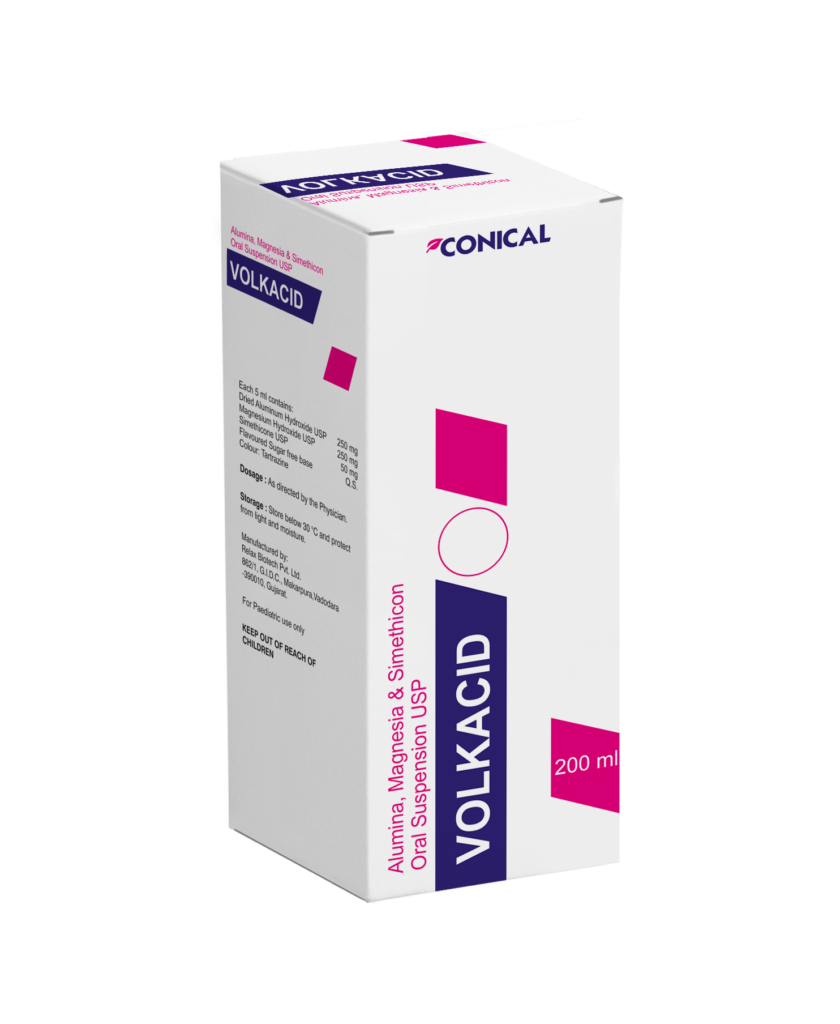
Brand Name: Volkacid™
How it works?
Uses of Alumina, Magnesia and Simethicone Oral Suspension
Alumina, Magnesia, and Simethicone Oral Suspension are used to treat symptoms of gas and excess stomach acid, such as heartburn, indigestion, bloating, and upset stomach.
It functions by dissolving gas bubbles (simethicone) and neutralizing stomach acid (alumina and magnesia).
Principal applications
Heartburn and acidity: The suspension’s alumina and magnesia neutralize excess stomach acid, quickly relieving the burning sensation in the throat and chest. It can be used after large meals or dietary disruptions to help calm the stomach lining and relieve indigestion and upset stomach.
Bloating and gas: Simethicone helps people release gas through flatulence or belching by reducing the surface tension of gas bubbles.
How do Alumina, Magnesia, and Simethicone Oral Suspension work?
Antacids like aluminum hydroxide and magnesium hydroxide help by neutralizing the extra acid in your stomach.
Antiflatulent: Simethicone works by lowering the surface tension of gas bubbles in the stomach, making it easier for them to break apart and be released as gas or through belching.
Precautions of Alumina, Magnesia and Simethicone Oral Suspension
Precautions While Taking Alumina, Magnesia and Simethicone Oral Suspension
- Constipation Risk: Aluminum hydroxide may cause constipation.
- Bowel Slowdown: Too much magnesium can slow down bowel movements.
- Risk of Blockage: Large doses may worsen or cause intestinal blockage, especially in elderly people or those with kidney problems.
Long-Term Use Concerns
- Phosphate Loss: Taking high or long-term doses—especially with a low-phosphorus diet—can reduce phosphate levels in the body. This may weaken bones and increase calcium in the urine, raising the risk of osteomalacia (soft bones).
- Medical Advice Needed: Always consult a doctor before long-term use or if you’re at risk of phosphate deficiency.
Special Caution for Kidney Patients
- People with kidney problems may build up too much aluminum and magnesium in their blood.
- Long-term use in such cases may lead to memory problems (dementia) or anemia (low red blood cells).
Not Recommended For
- Patients with porphyria (a rare blood disorder) who are on hemodialysis should avoid aluminum hydroxide, as it may be unsafe.
Dosages administration of Alumina, Magnesia and Simethicone Oral Suspension
Dosage Instruction of Alumina, Magnesia and Simethicone Oral Suspension (Oral Use)
- Adults: Take 5 to 10 ml by mouth 20 minutes to 1 hour after meals and at bedtime or as needed.
- Children: Give a dose that’s a suitable fraction of the adult dose, based on age and weight.
- Children under 5 years: Do not exceed 5 ml three times a day (t.d.s.).
- Elderly: The adult dose is generally suitable, unless advised otherwise by a doctor.
Side effects of Alumina, Magnesia and Simethicone Oral Suspension
Immune System Issues
Sometimes, people may have allergic reactions. These can include:
- Itchy skin (pruritus)
- Skin rashes or hives (urticaria)
- Swelling under the skin, especially around the face or throat (angioedema)
- Severe allergic reactions that can affect breathing (anaphylaxis) How often this happens is not known.
Digestive System Issues
Some people may experience:
- Diarrhea
- Constipation These side effects are uncommon.
Metabolism and Nutrition Issues
In very rare cases, people may have too much magnesium in their blood (hypermagnesemia), especially if they’ve been using magnesium hydroxide for a long time and have kidney problems.
Storage instruction of Alumina, Magnesia and Simethicone Oral Suspension
Store below 30°C and protect from light and moisture.
Keep the medicine out of reach of children.
Packing details of Alumina, Magnesia and Simethicone Oral Suspension
100 ml in a clear PET bottle with a cap and measuring cup. Such 01 bottle in a carton with a pack insert.
interested? let’s talk.
Contact us directly to receive full information on the product, the formulation, the science behind it, stability data, and more. Our Business Development Manager is a click away.
Frequently Asked Questions
Questions are useful tools, they open lines of communication; give us information; improve interactions, facilitate analysis, and many more.
-
We supply complete export dossiers including Certificate of Analysis, GMP certification, stability data, and regulatory compliance documents. These support registration, tenders, and import approvals across international markets.
-
Yes, we are the manufacturer and exporter of Alumina, Magnesia and Simethicone Oral Suspension. Our GMP‑certified facilities follow strict quality protocols to ensure consistent, safe, and compliant production for pharma and nutraceutical markets.
-
We supply complete export dossiers including Certificate of Analysis, GMP certification, stability data, and regulatory compliance documents. These support registration, tenders, and import approvals across international markets.
-
Standard packaging includes 170 ml or 200 ml HDPE bottles in cartons. Bulk packs or customized cartons are available for institutional supply, depending on partner needs.
-
It is used to relieve acidity, heartburn, indigestion, and gas. The combination neutralizes excess stomach acid, reduces bloating, and provides fast, soothing relief from discomfort.
-
Yes, when consumed as directed. It is a well‑established antacid and antiflatulent combination. Patients must follow dosage instructions carefully to ensure safe and effective use.